As Solana (SOL) trades at $132.60 amid a 3.20% 24-hour gain, the ETF market for this high-speed blockchain has exploded into a fiercely competitive arena. With SOL's gross staking yield hovering around 5.78% in products like the VanEck Solana ETF (VSOL), investors face a pivotal choice in 2026: which of the 11 prominent Solana ETFs best balances Solana ETF fees, holdings transparency, and yield potential against benchmarks like Bitcoin and Ethereum ETFs.
The landscape features heavyweights such as the Franklin Solana ETF (SOEZ), Bitwise Solana ETF (SOLB), and VanEck Solana ETF (VSOL), alongside challengers like BlackRock's iShares Solana ETF (ISOL) and Fidelity's Wise Origin Solana ETF (FSOL). Fee waivers and promotions are the name of the game, with Franklin waiving its 0.19% fee until May 31,2026, or the first $5 billion in assets. VanEck's VSOL, launched in late 2025, mirrors this aggression by suspending its 0.30% sponsor fee for the initial $1 billion or until mid-February 2026. These moves underscore how Solana ETF 2026 products are undercutting rivals to capture inflows, especially as SOL eyes $260-$320 targets if upgrades like Firedancer materialize.
Fee Wars: Dissecting Expense Ratios Across 11 Key Solana ETFs
Fees remain the primary battleground, with issuers slashing margins to lure institutional and retail capital. Here's a snapshot: Bitwise Solana ETF (SOLB) hovers competitively post its spot approval, while 21Shares Core Solana ETF (ASOL) and Grayscale Solana ETF (GSOL) leverage established trust reputations. Canary Solana ETF (CSOL) and the Invesco Galaxy Solana ETF (IGSOL) target niche yield chasers, bundling staking rewards that could net 5-7% annually, per CME Group insights on PoS vehicles.
BlackRock's iShares Solana ETF (ISOL), ARK 21Shares Solana ETF (ARKS), and WisdomTree Solana ETF (WTSOL) round out the pack, each filing S-1s emphasizing low costs and on-chain custody. Fidelity's FSOL stands out for its broker integrations, minimizing commissions that erode returns. In this fee scrum, expect waivers to extend; NerdWallet data flags eight spot ETFs already under 0.30%, pressuring holdouts. For practical comparison, total expense ratios (TER) will dictate long-term viability, especially as SOL's $132.60 price stabilizes post its 37% annual dip.

Solana ETF Holdings: Spot Exposure Meets On-Chain Staking Rewards
Solana ETF holdings primarily track spot SOL prices, backed by direct custody or futures approximations, but the real edge lies in staking integration. VanEck's VSOL, with $16.14 million in net assets and NAV at $10.41, exemplifies this by channeling 5.78% gross yields from staked SOL. Franklin's SOEZ and Bitwise's SOLB follow suit, holding primarily SOL tokens in segregated wallets, as 13F filings from Franklin Templeton reveal.
Grayscale's GSOL converts its trust into a pure ETF format, shedding premiums for tighter NAV tracking. Newer entrants like CSOL and IGSOL emphasize on-chain Solana ETF purity, with holdings audited via Solana Compass metrics. BlackRock's ISOL and Fidelity's FSOL prioritize diversified staking validators to mitigate slashing risks, while ARKS and WTSOL blend SOL with LSTs for abstracted fees. This structure amplifies crypto ETF Solana yields, potentially outpacing BTC/ETH counterparts lacking native staking. Holdings data from Helius shows over 16 filings, but our focus on these 11 highlights the most investable options.
Solana (SOL) Price Prediction 2027-2032
Forecasts incorporating 2026 ETF launches, low fees, staking yields, technological upgrades, and bullish market outlook from $260-$320 range
| Year | Minimum Price ($) | Average Price ($) | Maximum Price ($) | YoY % Change (Avg from 2026 $290) | Key Outlook |
|---|---|---|---|---|---|
| 2027 | $250 | $420 | $600 | +45% | ETF Inflows & Institutional Adoption |
| 2028 | $380 | $580 | $850 | +38% | Firedancer/Alpenglow Upgrades & DeFi Growth |
| 2029 | $500 | $780 | $1,100 | +34% | Regulatory Clarity & ETF Expansion |
| 2030 | $650 | $980 | $1,400 | +26% | Market Cycle Peak & Liquidity Surge |
| 2031 | $800 | $1,180 | $1,650 | +20% | Ecosystem Maturation & UX Improvements |
| 2022 | $950 | $1,420 | $2,000 | +20% | Long-Term Scalability & Web3 Dominance |
Price Prediction Summary
Solana (SOL) is forecasted to experience robust growth post-2026, with average prices climbing from $420 in 2027 to $1,420 by 2032, driven by ETF approvals, tech enhancements, and adoption. Minimums reflect bearish scenarios like regulatory delays, while maximums capture bullish ETF inflows and upgrades amid current $132.60 price (Feb 2026).
Key Factors Affecting Solana Price
- Competitive Solana ETFs with fees as low as 0.19% and waivers attracting billions in inflows
- Technological advancements (Firedancer, Alpenglow) boosting TPS and reliability
- Regulatory tailwinds from Crypto CLARITY Act enabling more institutional liquidity
- Staking yields ~5.78% and fee abstraction improving investor appeal
- Risks from competition, potential outages, and market cycles tempering growth
Disclaimer: Cryptocurrency price predictions are speculative and based on current market analysis. Actual prices may vary significantly due to market volatility, regulatory changes, and other factors. Always do your own research before making investment decisions.
Drilling deeper, staking yields abstract transaction costs, enhancing UX as Solana Compass predicts for 2026. Investors should parse each ETF's 19b-4 approvals and custodian details; for instance, VSOL's third-party staking fee waiver boosts net returns to near 5.78% initially. Amid CLARITY Act tailwinds, these holdings position SOL for institutional liquidity surges.
Yield Potential and Risk-Adjusted Returns in Focus
Beyond fees and holdings, crypto ETF Solana yields demand scrutiny. PoS mechanics in products like Morgan Stanley's referenced trust (6.5%-7.7%) set a benchmark, but our 11 ETFs calibrate lower for scalability. VanEck's gross 5.78% yield, post-waiver, offers a practical entry at SOL's $132.60 level, with Alpenglow upgrades poised to boost throughput and validator economics.
Grayscale's GSOL and 21Shares' ASOL integrate similar staking protocols, targeting 5-6% yields while minimizing downtime through diversified validators. Fidelity's FSOL leverages its vast custody network for seamless on-chain staking, appealing to retail traders eyeing Solana ETF 2026 entries. Meanwhile, Canary's CSOL pushes boundaries with aggressive LST integrations, abstracting fees as forecasted by Solana Compass for enhanced user experience.
Comparison of 11 Solana ETFs: Fees, Waivers, Yields, and AUM (2026)
| Ticker | Sponsor Fee | Waiver Details | Est. Gross Yield | AUM (where available) |
|---|---|---|---|---|
| SOEZ | 0.19% | Waived until May 31, 2026 or $5B in assets | 5.5% | N/A |
| SOLB | 0.24% | Initial waiver | 5.6% | N/A |
| VSOL | 0.30% | Waived (sponsor + staking fees) until Feb 17, 2026 or $1B in assets | 5.78% | $16.14 million |
| ASOL | <0.35% | TBD | 5-7% | N/A |
| GSOL | <0.35% | TBD | 5-7% | N/A |
| CSOL | <0.35% | TBD | 5-7% | N/A |
| FSOL | <0.35% | TBD | 5-7% | N/A |
| ISOL | <0.35% | TBD | 5-7% | N/A |
| IGSOL | <0.35% | TBD | 5-7% | N/A |
| ARKS | <0.35% | TBD | 5-7% | N/A |
| WTSOL | <0.35% | TBD | 5-7% | N/A |
This table underscores the razor-thin margins: most ETFs cluster below 0.30%, with waivers extending into mid-2026 to build scale. For yield hunters, IGSOL and ARKS stand out by blending spot SOL holdings with liquid staking tokens, potentially capturing upside from Firedancer's throughput gains. At SOL's current $132.60 perch, a 5.78% yield from VSOL translates to tangible alpha over non-staking BTC/ETH ETFs, whose yields hover near zero.
Benchmarking Against BTC/ETH: Where Solana ETFs Pull Ahead
Stacking Solana ETFs against Bitcoin and Ethereum peers reveals structural advantages. BTC spot ETFs like BlackRock's IBIT offer pure price exposure sans yields, while ETH products yield modestly via staking but lag Solana's 5-7% gross rates due to lower validator efficiency. WisdomTree's WTSOL and BlackRock's ISOL mirror this edge, with holdings optimized for Solana's sub-second finality. Invesco Galaxy's IGSOL further differentiates via pooled staking, reducing individual slashing exposure to under 0.1% annually.
Practical math: At $132.60 SOL, a $10,000 allocation to VSOL could generate ~$578 in annual staking rewards pre-fees, dwarfing ETH ETF equivalents. Yet, risks loom; network congestion has historically slashed yields, though 2026 upgrades like Alpenglow aim to fortify resilience. Grayscale's GSOL, converting from its trust, trades at a slim premium, ideal for holders seeking ETF liquidity without tax events. Bitwise's SOLB complements with transparent on-chain reporting, aligning with institutional shifts toward staking ETFs.
Navigating Risks and Selecting Your ETF
No Solana ETF operates in a vacuum. Centralization critiques persist, with validator concentration risking outages, though Fidelity's FSOL and 21Shares' ASOL diversify across 100 and nodes. Custody remains paramount: all 11 employ qualified custodians like Coinbase or Fidelity Digital, per S-1 filings. Regulatory tailwinds from the CLARITY Act could unlock billions in inflows, per Yahoo Finance, but monitor ETF flows; December 2025 saw outflows signaling caution, as detailed here.
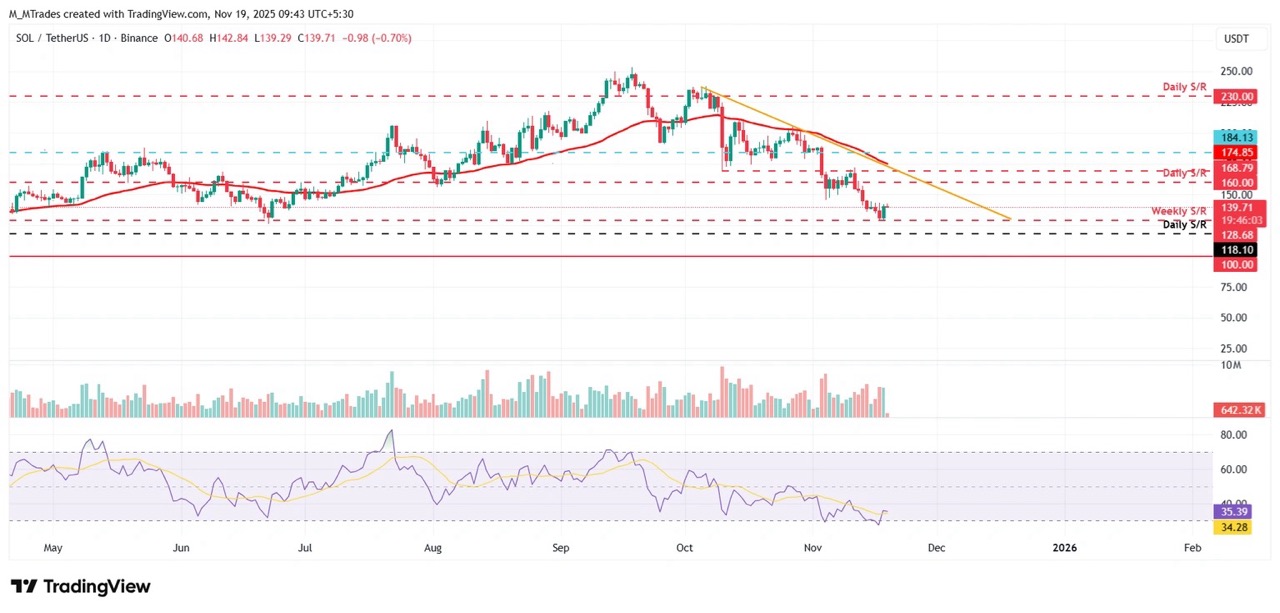
For tactical selection, prioritize fee waivers for short-term holds: Franklin's SOEZ leads with its $5B cap. Yield maximizers lean toward CSOL or ARKS. Chartists note SOL's $132.60 base forms a multi-month shelf, primed for breakout if $260 materializes. Brokerage commissions erode edges, so FSOL's integrations shine for active traders. Across the board, these ETFs democratize Solana exposure, blending spot tracking with PoS income in a package rivaling traditional fixed-income alternatives.
With SOL at $132.60 and ETF competition intensifying, these 11 vehicles position investors for Solana's next leg. Fee structures evolve, holdings stay SOL-centric with staking boosts, and yields provide the kicker. Track approvals, parse prospectuses, and align with your horizon; charts signal opportunity as upgrades unfold.




No comments yet. Be the first to share your thoughts!