Bitcoin ETF 2026 market overview
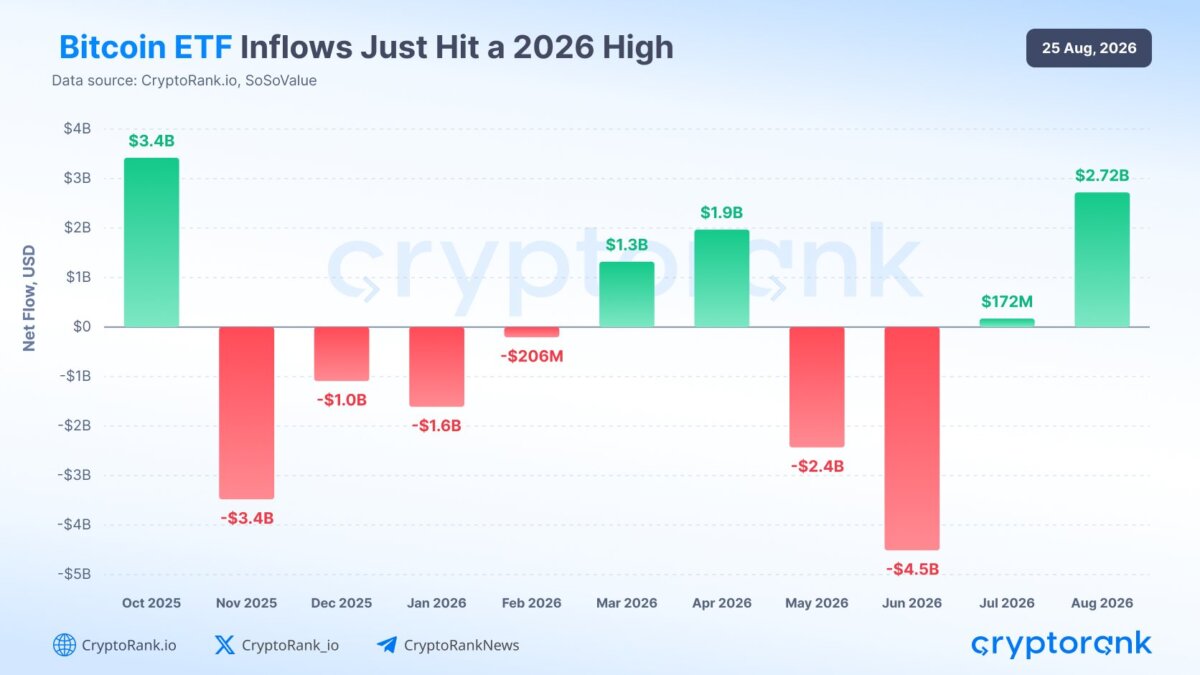
The spot Bitcoin ETF market has shifted from a novelty to a dominant asset class, with inflows reaching new heights in 2026. While futures-based products once led the charge, institutional capital now flows primarily through spot funds, attracted by direct exposure to Bitcoin’s price action and lower tracking errors. This structural shift has solidified the spot ETF’s role as the primary vehicle for regulated crypto exposure.
Market leadership remains concentrated among a few major issuers. As of late 2026, the iShares Bitcoin Trust (IBIT) and Fidelity Wise Origin Bitcoin Fund (FBTC) continue to hold the largest assets under management, reflecting strong institutional demand. Despite broader market volatility, these funds have demonstrated resilience, with net inflows often offsetting outflows during corrective phases.
The performance of the sector is closely tied to Bitcoin’s underlying price movements. Over the past year, spot Bitcoin ETFs have tracked the asset’s trajectory, with some funds like IBIT showing a one-year price growth of approximately -46.26%, mirroring the broader crypto market’s fluctuations. This correlation underscores the importance of understanding Bitcoin’s market cycles when evaluating ETF performance.
Top Bitcoin ETFs by Assets Under Management
The spot Bitcoin ETF market has consolidated around a few dominant issuers, with BlackRock’s iShares Bitcoin Trust (IBIT) maintaining a clear lead in assets under management (AUM). As of mid-2026, IBIT holds approximately $55 billion in assets, significantly outpacing competitors like Fidelity’s FBTC and Grayscale’s BTC. This AUM advantage often correlates with deeper liquidity and tighter bid-ask spreads, making it easier for large investors to enter or exit positions without significant slippage.
While AUM is a primary indicator of scale, it is not the only metric for evaluating a fund. Expense ratios have compressed across the board, with most top-tier ETFs charging between 0.12% and 0.25% annually. For active traders, liquidity and volume are often more critical than slight fee differences. The following comparison highlights the four largest spot Bitcoin ETFs by market share, focusing on the metrics that matter for long-term holding and daily trading.
| Ticker | Issuer | AUM (Approx.) | Expense Ratio |
|---|---|---|---|
| IBIT | BlackRock | $55B | 0.12% |
| FBTC | Fidelity | $12B | 0.14% |
| BTC | Grayscale | $10B | 0.25% |
| GBTC | Invesco Galaxy | $406M | 0.35% |
Liquidity varies substantially among these funds. IBIT consistently reports the highest daily trading volume, often exceeding the volume of many traditional equity ETFs. Fidelity’s FBTC follows as a strong second, offering competitive spreads and reliable execution. For investors prioritizing low costs and institutional-grade infrastructure, these two options represent the most mature choices in the current market.
When selecting a Bitcoin ETF, consider how you intend to use it. For buy-and-hold strategies, the expense ratio is the primary drag on returns, favoring IBIT and FBTC. For active traders, the depth of the order book and trading volume are paramount. Always verify the latest fee structures and AUM figures directly from the issuer’s official fact sheet, as these metrics can shift rapidly with market conditions.
Institutional adoption drivers in 2026
Institutional capital is shifting from speculative curiosity to structural necessity, driven by three converging forces: regulatory clarity, mature custody standards, and the undeniable math of portfolio diversification. For pension funds and endowments, Bitcoin ETFs have become a compliant bridge to digital assets without the operational friction of direct ownership.
Regulatory clarity reduces compliance risk
The approval of spot Bitcoin ETFs in the United States provided the regulatory framework institutions had waited years for. Regulators have established clear guidelines for custody, auditing, and market surveillance, significantly reducing the legal ambiguity that previously blocked large-scale allocation. This clarity allows fiduciaries to justify Bitcoin exposure under modern investment policies, treating it as a distinct asset class rather than a speculative wager.
Custody solutions have matured
Early concerns about the security of digital assets have been addressed through institutional-grade custody solutions. Major financial providers now offer multi-signature, cold-storage protocols with insurance coverage that meets traditional finance standards. This infrastructure ensures that the Bitcoin backing each share is secure, auditable, and readily accessible, removing the primary technical barrier to entry for conservative investors.
Portfolio diversification benefits
Bitcoin’s low correlation with traditional equities and bonds makes it a powerful diversifier. In 2026, as volatility in traditional markets persists, institutions are allocating small percentages (1-3%) of their portfolios to Bitcoin ETFs to hedge against inflation and currency debasement. This strategic allocation has been shown to improve risk-adjusted returns, making Bitcoin a standard component of modern portfolio theory for many large-scale managers.
Leveraged and alternative Bitcoin ETFs
While spot Bitcoin ETFs track the underlying asset for long-term holding, leveraged funds cater to active traders seeking amplified daily returns. These products use derivatives to multiply the daily performance of Bitcoin, often by 2x or 3x. This structure creates significant risk due to compounding effects, making them unsuitable for buy-and-hold investors who may see their capital erode even if Bitcoin’s price rises over time.
The 2x Bitcoin ETF (BITX) is a prominent example, seeking to deliver twice the daily performance of Bitcoin before fees. Because these funds reset daily, they are designed for intraday trading or very short-term positions. Traders must monitor volatility closely, as extended market swings can lead to substantial losses that exceed the initial investment. For those interested in the mechanics of BITX, the issuer provides detailed prospectus information on their official website.
Key questions about Bitcoin ETFs
Investors navigating the spot Bitcoin ETF market often encounter specific hurdles regarding leverage, selection, and long-term value. The following answers address the most common queries for 2026, drawing on current market data and official fund disclosures.
For traders monitoring broader market movements, Bitcoin’s price action often dictates ETF flows and investor sentiment.
No comments yet. Be the first to share your thoughts!