Tracking Bitcoin ETF holdings 2026
The spot Bitcoin ETF market in 2026 has settled into a clear hierarchy, with a few major issuers capturing the vast majority of institutional and retail capital. While dozens of funds now trade on major exchanges, the landscape is defined by the sheer scale of BlackRock and Fidelity, whose products serve as the primary entry points for traditional finance exposure to digital assets.
BlackRock’s iShares Bitcoin Trust (IBIT) remains the dominant force, boasting approximately $55 billion in assets under management. This position reflects not just superior marketing, but the deep liquidity and operational maturity that institutional investors demand. Fidelity’s Wise Origin Fund follows closely, leveraging its established relationship with high-net-worth clients and retirement plan administrators to secure a significant share of the market.
Understanding these holdings is essential for gauging market sentiment. When these leaders see net inflows, it often signals confidence from large-scale allocators; conversely, outflows can indicate profit-taking or risk reduction. The data below provides a real-time view of Bitcoin’s price action, which directly correlates with the valuation of these ETF portfolios.
BlackRock IBIT leads in assets
BlackRock’s iShares Bitcoin Trust (IBIT) dominates the spot Bitcoin ETF landscape, holding the largest share of assets under management among its peers. As of early 2026, IBIT has surpassed the $70 billion mark, a milestone that underscores its status as the default choice for institutional and retail investors seeking regulated Bitcoin exposure.
This leadership position is not accidental. IBIT benefits from BlackRock’s massive existing distribution network and the trust established through its traditional finance products. The fund’s sheer size creates a liquidity advantage, allowing large block trades to execute with minimal slippage compared to smaller competitors. For many financial advisors, IBIT serves as the primary satellite holding in a broader portfolio, acting as a digital gold proxy with the familiar mechanics of a traditional equity trade.
The fund’s structure is straightforward, seeking to reflect the performance of the price of bitcoin through an exchange-traded product. This simplicity, combined with the brand recognition of the iShares label, has allowed it to capture the majority of net inflows since the approval of spot Bitcoin ETFs. While competitors offer lower fees or niche features, IBIT’s scale provides a network effect that is difficult to replicate.
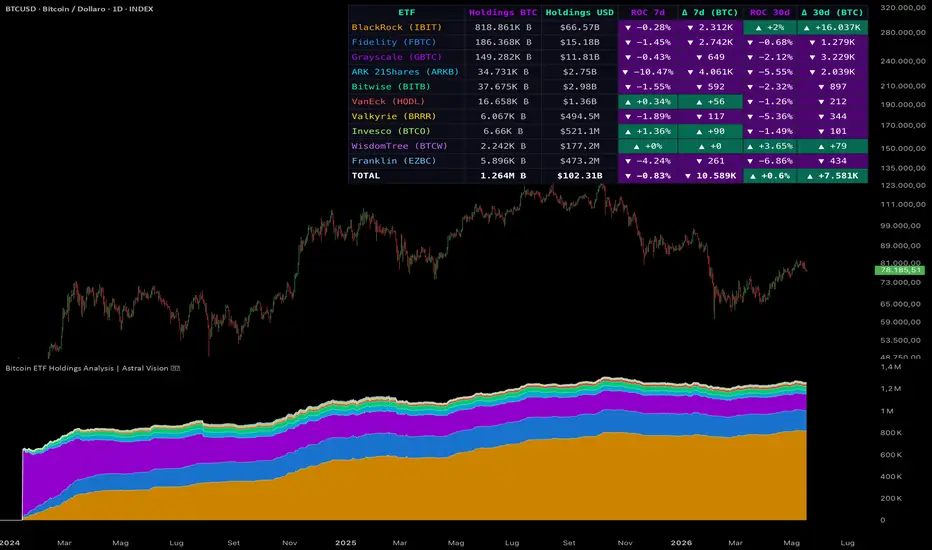
Investors tracking the market should view IBIT not just as a product, but as a market indicator. Its daily volume and net flows often signal broader sentiment toward cryptocurrency within traditional finance. As the market matures, the gap between IBIT and other funds may widen, reinforcing its role as the benchmark for Bitcoin ETF performance.
Fidelity and other major contenders
Fidelity's FBTC remains the dominant force in Bitcoin ETF holdings, capturing a substantial share of institutional and retail assets. Its early-mover advantage and integration with Fidelity's massive existing financial infrastructure allow it to move significantly more volume than most competitors. While it leads in total assets under management, the gap between Fidelity and the rest of the field is the primary dynamic shaping the market.
Franklin Templeton's EZBC has carved out a notable position, particularly among conservative institutional investors who prioritize the firm's established fixed-income and asset management reputation. By leveraging its extensive distribution network, Franklin Templeton has secured a steady flow of capital, making it a consistent top-five player despite not matching Fidelity's sheer scale. This stability offers investors an alternative that feels familiar within traditional finance frameworks.
Invesco Galaxy represents a different approach, combining Invesco's broad asset management capabilities with Galaxy Digital's specialized cryptocurrency expertise. This partnership allows the Invesco Galaxy Bitcoin ETF to appeal to investors seeking deep crypto-native insights alongside traditional ETF accessibility. While its market share trails the leaders, its unique positioning ensures it remains a significant contender in the evolving landscape of Bitcoin ETFs.
The following table compares the key metrics for these top players, highlighting the disparity in scale and the specific cost structures investors face.
| ETF | Issuer | Expense Ratio | AUM Category |
|---|---|---|---|
| FBTC | Fidelity | 0.25% | Leader |
| EZBC | Franklin Templeton | 0.30% | Top 5 |
| IBIT | iShares | 0.25% | Top 5 |
| GBTC | Grayscale | 1.50% | Declining |
| BTCO | Invesco Galaxy | 0.25% | Top 10 |
Tracking daily inflows and outflows
Net inflows and outflows in Bitcoin spot ETFs serve as a real-time barometer for institutional and retail demand. Unlike price charts, which reflect market valuation, flow data reveals where capital is actually moving in and out of regulated vehicles. A sustained period of net inflows typically signals growing confidence and accumulation, while consistent outflows often indicate profit-taking or a shift toward alternative assets.
Monitoring these daily movements helps distinguish between temporary market noise and genuine shifts in sentiment. For instance, a single day of heavy outflows might reflect rebalancing by a large fund, whereas a week of declining holdings suggests a broader retreat from exposure. Investors use this data to gauge whether the current price action is supported by fresh capital or driven solely by existing holders.
Note: Daily flow data is often aggregated from multiple providers like CoinGlass or Farside Investors. Always verify the source when interpreting sudden spikes, as reporting lags or data corrections can occasionally skew the immediate picture.
To contextualize these flows, it is helpful to view them alongside the asset’s price action. When inflows rise while the price stabilizes, it often points to strong underlying demand absorbing supply. Conversely, if outflows coincide with a price drop, it confirms that selling pressure is being met with actual redemption requests rather than just market speculation. This combination of flow data and price trends provides a clearer picture of the ETF market’s health than either metric alone.
Choosing the right Bitcoin ETF
Selecting the best Bitcoin ETF comes down to three practical factors: fees, liquidity, and provider reputation. While many funds track the same asset, the differences in cost and trading volume can significantly impact your returns over time. BlackRock and Fidelity currently lead the market in assets under management, but smaller providers often compete with lower expense ratios.
Fees and trading volume
Expense ratios are the most predictable cost you will pay. Most spot Bitcoin ETFs charge between 0.15% and 0.25% annually. A lower fee directly improves your long-term holding returns. Liquidity matters for ease of entry and exit. High trading volumes mean tighter bid-ask spreads, reducing the hidden cost of each trade. Always check the average daily volume before buying.
Provider reputation and security
The trustworthiness of the issuer and the custodian is critical. BlackRock and Fidelity are well-known for their institutional-grade security and regulatory compliance. Their scale often ensures better liquidity and more stable trading conditions. For smaller providers, verify who holds the actual Bitcoin. Secure custody is non-negotiable in this space.
Live market context
Use a live chart to see how the underlying Bitcoin price moves relative to the ETF. This helps you understand tracking error and volatility in real-time.
Related resources
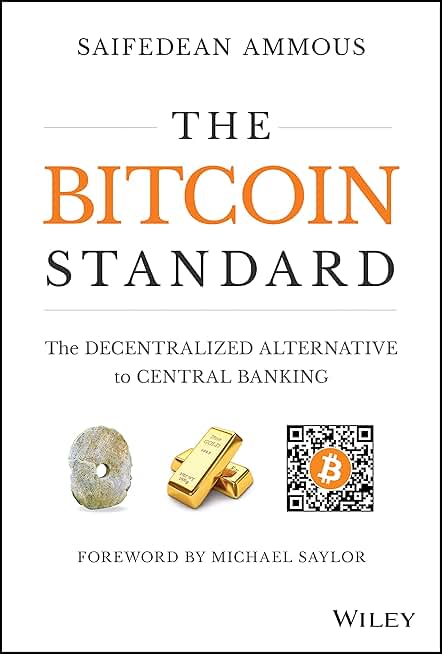
If you are new to Bitcoin or want to secure your holdings, consider these educational resources and tools.


As an Amazon Associate, we may earn from qualifying purchases.
Frequently asked: what to check next
What is the best Bitcoin ETF to hold?
Determining the "best" Bitcoin ETF depends on your priority: cost efficiency, liquidity, or provider trust. For most investors, the iShares Bitcoin Trust (IBIT) and Fidelity Wise Origin Bitcoin Fund (FBTC) lead in trading volume and assets under management, offering tight bid-ask spreads. However, the Grayscale Bitcoin Trust (GBTC) remains a common choice for those already holding the asset, despite its higher expense ratio. Always compare the expense ratio and trading volume on your specific exchange before buying.
Are Bitcoin ETFs safe?
Bitcoin spot ETFs are regulated securities traded on major U.S. exchanges, offering a layer of security compared to holding cryptocurrency on unregulated platforms. The underlying Bitcoin is held by qualified custodians like Coinbase Custody or BitGo. However, the ETF itself is subject to market volatility. If Bitcoin's price drops, your ETF value drops accordingly. They are not risk-free, but they eliminate the risk of losing private keys or dealing with exchange hacks.
How do Bitcoin ETFs differ from holding Bitcoin directly?
When you buy a Bitcoin ETF, you own a share of a trust that holds Bitcoin, not the cryptocurrency itself. You cannot withdraw the Bitcoin to a personal wallet for spending or DeFi use. This structure simplifies taxation and integrates easily with traditional brokerage accounts, IRAs, and 401(k)s. Direct ownership offers full control and self-custody benefits, while ETFs offer convenience and regulatory oversight.
Do Bitcoin ETFs pay dividends?
No, Bitcoin spot ETFs do not pay dividends. Bitcoin is a non-yielding asset; it does not generate cash flow like stocks or bonds. Your return comes entirely from capital appreciation—the difference between the price you paid and the price you sell. Some leveraged or futures-based Bitcoin products may distribute gains, but standard spot ETFs like IBIT, FBTC, and ARKB do not.
Can I hold Bitcoin ETFs in an IRA?
Yes, many self-directed IRAs and traditional brokerage accounts allow you to hold Bitcoin ETFs. This enables tax-advantaged growth for your Bitcoin exposure. Traditional IRAs offer tax-deferred growth, while Roth IRAs allow for tax-free withdrawals. Check with your custodian to ensure they support cryptocurrency-related securities, as some may restrict specific tickers.
No comments yet. Be the first to share your thoughts!