Spot ETF flows break records in 2026
Spot Bitcoin exchange-traded funds have crossed a major financial threshold in 2026. Total assets under management across US spot Bitcoin ETFs have officially exceeded $100 billion. This milestone marks a shift from early adoption curiosity to sustained institutional integration. The growth is not driven by retail speculation or short-term trading hype, but by steady, large-scale capital allocation from traditional finance.
The primary driver behind this surge is the entry of major asset managers and wealth advisors into the space. Firms like BlackRock, Fidelity, and others have integrated Bitcoin exposure directly into pension funds, endowments, and high-net-worth portfolios. Unlike previous cycles where price spikes triggered retail buying frenzies, 2026’s inflows reflect a structural change. Institutions are treating Bitcoin as a portfolio diversifier rather than a speculative gamble.
This institutional adoption has stabilized the market dynamics significantly. While volatility remains, the sheer volume of capital means that daily price movements are less susceptible to the whims of individual traders. The $100 billion mark serves as a psychological and financial barrier, signaling to the broader market that Bitcoin has earned its place alongside traditional asset classes like gold or treasury bonds.
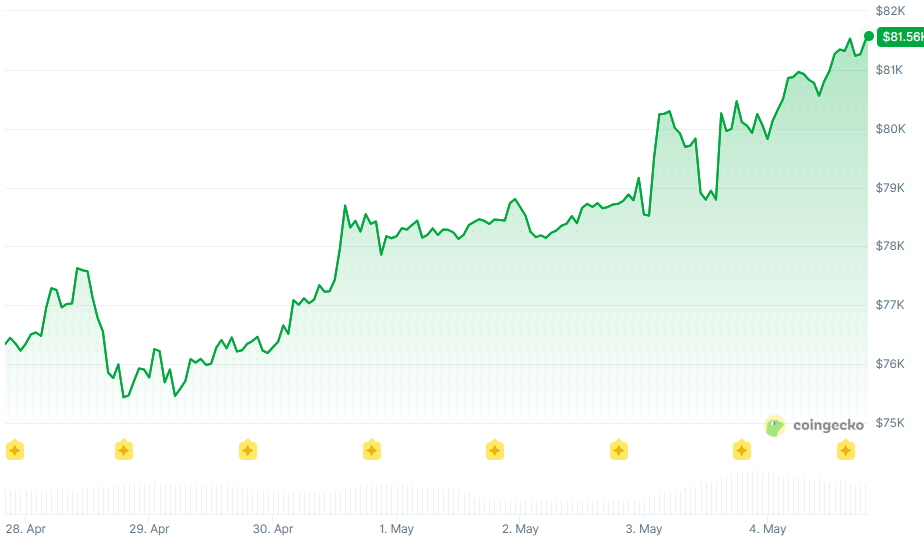
To visualize the trajectory of this growth, the following chart shows the price action and market sentiment that has accompanied these inflows. It highlights how the asset has matured alongside its financial infrastructure.
BlackRock and Fidelity lead the charge
BlackRock’s iShares Bitcoin Trust (IBIT) and Fidelity’s Wise Origin Fund (FBTC) have become the primary gateways for institutional capital into spot Bitcoin ETFs. Their dominance is not accidental; it stems from established infrastructure, regulatory familiarity, and the sheer scale of existing client relationships. For large asset managers and pension funds, the choice often comes down to which custody and compliance frameworks they already trust.
IBIT captured the market early, leveraging BlackRock’s global distribution network to attract trillions in assets under management. Fidelity followed with a strategy focused on institutional-grade security and integration with its existing retirement account ecosystem. Together, these two funds typically account for the majority of daily net inflows in the spot Bitcoin ETF sector, effectively setting the standard for liquidity and trading volume.
The table below outlines the core structural differences between the two leading spot Bitcoin ETFs. While both offer direct exposure to the underlying asset, their fee structures and custody arrangements differ slightly, influencing where specific institutional mandates land.
| Issuer | Ticker | Expense Ratio | Custodian |
|---|---|---|---|
| BlackRock | IBIT | 0.25% | Coinbase Custody |
| Fidelity | FBTC | 0.25% | Fidelity Digital Assets |
| Grayscale | BTC | 1.50% | Coinbase Custody |
| Ark 21Shares | ARKB | 0.21% | Coinbase Custody |
While BlackRock and Fidelity dominate the spot market, other providers are carving out niches through lower fees or specialized features. Grayscale, for instance, converted its trust to an ETF but retains a higher expense ratio, while newer entrants like Ark 21Shares compete on cost. However, for most institutional portfolios seeking simplicity and liquidity, IBIT and FBTC remain the default options.
Why institutions prefer spot over futures
The shift from futures-based Bitcoin ETFs to spot funds represents a structural upgrade in how institutions access digital assets. For large-scale capital allocators, the difference is not merely about price exposure; it is about operational simplicity, tax efficiency, and tracking accuracy. Spot ETFs remove the complexities of rolling futures contracts and the friction associated with direct custody.
Tracking accuracy and basis risk
Spot ETFs track the underlying asset’s price directly, eliminating the basis risk inherent in futures markets. Futures contracts require regular rolling, which can introduce tracking error when the market is in contango or backwardation. This structural drag reduces net returns over time. Spot funds avoid this by holding the actual asset, ensuring the fund’s performance mirrors Bitcoin’s price movement with minimal deviation.
Tax efficiency for institutional accounts
Futures-based ETFs are often taxed under Section 1256 of the Internal Revenue Code, which mandates a 60/40 split of long-term and short-term capital gains regardless of holding period. This can result in less favorable tax treatment for certain institutional investors. Spot ETFs, structured as grantor trusts, generally avoid this complexity, allowing investors to benefit from standard capital gains rules based on their actual holding duration.
Custody simplicity
Direct ownership of Bitcoin requires managing private keys, multi-signature wallets, and robust cybersecurity infrastructure. This is a significant operational burden for traditional asset managers. Spot ETFs outsource custody to regulated entities, allowing institutions to gain Bitcoin exposure through familiar brokerage accounts. This simplicity lowers the barrier to entry and integrates seamlessly with existing portfolio management systems.
Ethereum and multi-asset ETFs gain traction
The 2026 market narrative has expanded well beyond Bitcoin. While spot Bitcoin ETFs continue to dominate headlines, Ethereum-focused funds and diversified multi-asset products have established a significant foothold in institutional portfolios. This shift marks a maturation in how traditional finance interacts with digital assets, moving from single-asset speculation to broader crypto exposure.
BlackRock’s ETHA and Fidelity’s FETH have emerged as primary vehicles for Ethereum exposure, offering low-fee access to the second-largest cryptocurrency. These funds allow investors to gain direct price sensitivity to ETH without the operational complexities of self-custody. The inflows into these products signal strong institutional demand for Ethereum’s utility layer, particularly as network upgrades improve scalability and reduce transaction costs.
Beyond individual assets, diversified multi-asset ETFs like Grayscale’s GDLC are gaining traction by bundling exposure to Bitcoin, Ethereum, and other major cryptocurrencies into a single ticker. This approach appeals to risk-averse institutional allocators seeking broad crypto market beta rather than picking winners. The growth in these baskets reflects a strategic pivot toward portfolio diversification within the digital asset space.
The expansion into Ethereum and multi-asset products suggests that the crypto ETF market is no longer a Bitcoin-only phenomenon. Institutional investors are increasingly treating digital assets as a distinct asset class with multiple layers of exposure, driving demand for a wider range of investment vehicles.
Key questions on crypto ETF adoption
Investors are increasingly asking how spot Bitcoin and Ethereum funds fit into 2026 portfolios. The market has matured from speculative interest to a $100 billion asset class, driven by institutional adoption and regulatory clarity. Understanding the specific products available helps clarify where capital is flowing.
What is the new crypto ETF for 2026?
The landscape now features specialized funds beyond simple Bitcoin exposure. BlackRock’s IBIT remains the dominant Bitcoin vehicle, while Morgan Stanley’s MSBT offers a lower-cost alternative for Bitcoin exposure. For Ethereum, BlackRock’s ETHA and Fidelity’s FETH are the primary choices. Grayscale’s GDLC provides diversified multi-asset exposure, appealing to investors seeking broader crypto market participation rather than single-asset concentration.
How much money is in spot crypto ETFs?
Total assets across US spot Bitcoin ETFs have exceeded $100 billion in 2026, breaking previous records. This growth reflects sustained inflows from both retail and institutional investors who prefer the regulatory safety of exchange-traded funds over direct cryptocurrency holdings. The scale of these assets underscores the shift toward traditional financial infrastructure for digital asset management.
Should I use a live widget for tracking?
Static price data becomes outdated quickly in volatile markets. Using provider-backed widgets ensures you see real-time valuations and technical indicators. This approach allows for accurate decision-making based on current market conditions rather than stale snapshots.
No comments yet. Be the first to share your thoughts!