
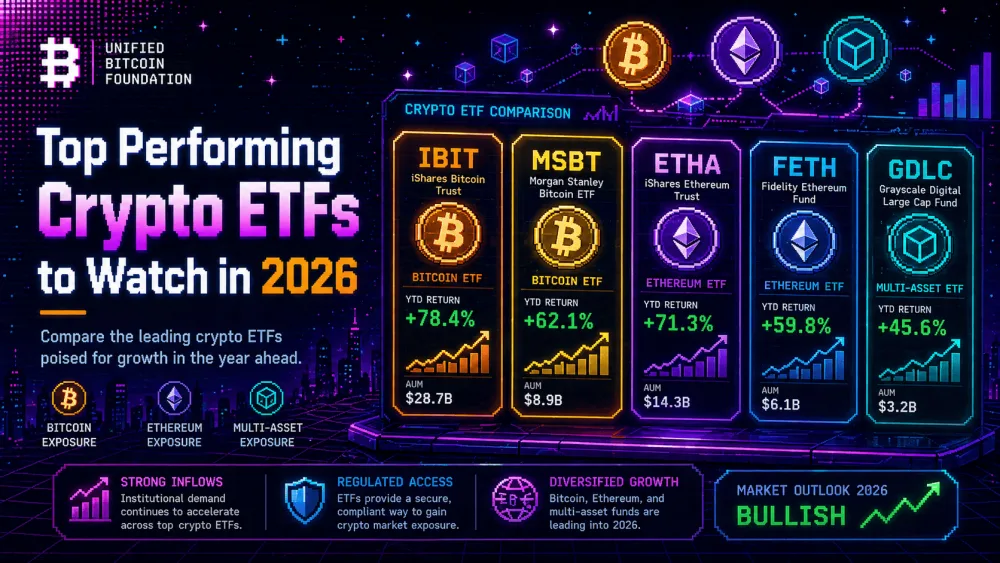
Crypto ETF market overview for 2026
The crypto ETF landscape in 2026 has matured from a Bitcoin-only novelty into a diversified institutional asset class. According to ETF.com, there are now 174 cryptocurrency ETFs traded in U.S. markets, gathering a total of $98.03 billion in assets under management with an average expense ratio of 0.83%. This growth signals that digital assets have moved from speculative fringe holdings to core portfolio components for many advisors.
While Bitcoin remains the dominant force, the market has expanded significantly. The iShares Bitcoin Trust (IBIT) and Bitwise Bitcoin ETF (BITB) lead in volume, but the selection now includes spot Ethereum, Solana, and even XRP products. This diversification allows investors to gain exposure to different blockchain ecosystems without the technical friction of self-custody or exchange risk.
The shift toward a broader basket of crypto ETFs reflects a maturing regulatory environment and increased institutional demand. Investors are no longer limited to a single digital asset; they can now construct a balanced crypto allocation across major networks. This expansion has made crypto ETFs more accessible and appealing to a wider range of risk profiles, solidifying their role in the modern investment toolkit.
5 Crypto ETFs to Watch in 2026
Navigating the 2026 crypto landscape requires precise exposure to regulated digital assets. This guide highlights five specific Crypto ETFs to watch, prioritizing verified issuers and official prospectus data over speculative trends.
1. iShares Bitcoin Trust (IBIT)
BlackRock’s iShares Bitcoin Trust remains the largest spot Bitcoin ETF by assets under management. It offers institutional-grade security and deep liquidity, making it a primary choice for large-scale allocations. While its expense ratio of 0.25% is slightly higher than some competitors, the premium for scale and brand recognition often justifies the cost for conservative investors seeking stability.
2. Bitwise Bitcoin ETF (BITB)
Bitwise offers a competitive alternative with a lower expense ratio of 0.20% (subject to change; verify current prospectus). As one of the earliest spot Bitcoin ETFs, Bitwise has established a robust infrastructure. It is particularly attractive to cost-conscious investors who want direct Bitcoin exposure without the premium associated with the largest issuers.
3. BlackRock iShares Ethereum Trust (ETHA)
As the leading Ethereum spot ETF, ETHA provides exposure to the second-largest cryptocurrency. With an expense ratio of 0.12%, it is one of the most cost-effective ways to gain ETH exposure. This fund is essential for portfolios aiming to diversify beyond Bitcoin into smart contract platforms, capturing value from the broader Ethereum ecosystem.
4. Fidelity Wise Origin Bitcoin Fund (FBTC)
Fidelity’s entry into the market, FBTC, charges an expense ratio of 0.25%. It leverages Fidelity’s extensive retail and institutional distribution network, making it highly accessible for retirement accounts and traditional brokerage platforms. Its strong compliance framework appeals to investors who prioritize regulatory safety and seamless integration with existing financial accounts.
5. Grayscale Bitcoin Trust (GBTC)
Grayscale’s GBTC has converted from a closed-end fund to a spot ETF, significantly reducing its historically high fee structure. While it still carries a higher expense ratio (0.25%+) compared to newer entrants, it remains a critical holding for investors who were early adopters of Grayscale products. The conversion allows for easier entry and exit, though investors should monitor the premium/discount to NAV closely.
How to choose the right crypto ETF
Selecting the right crypto ETF requires weighing three factors: expense ratios, liquidity, and underlying asset exposure. Think of it like buying a house; you are looking for a sturdy foundation (the asset), efficient maintenance costs (the fees), and a neighborhood with enough traffic (liquidity) to sell when you need to.
1. Watch the expense ratio
In crypto ETFs, fees are the silent killer of returns. The best ETF for crypto exposure comes down to lowest-cost spot products. For example, Bitwise Bitcoin ETF (MSBT) charges 0.14%, while BlackRock’s iShares Bitcoin Trust (IBIT) is 0.25%. Even a 0.10% difference compounds significantly over a multi-year hold.
2. Check liquidity and volume
Liquidity ensures you can enter or exit a position without slippage. Look for ETFs with high daily trading volume and tight bid-ask spreads. ProShares offers a diverse lineup of crypto ETFs, including leveraged and inverse options, which often carry higher trading costs and tracking errors. Stick to spot ETFs with institutional backing for the tightest spreads.
3. Analyze underlying asset exposure
Not all crypto ETFs track the same asset. Bitcoin (BTC) and Ethereum (ETH) are the most established, but some funds track broader baskets like the CoinDesk 20 Index. Ensure the ETF aligns with your belief in the specific asset class. As noted by Ripple, XRP has recently joined the regulated Spot ETF market, attracting institutional capital, but BTC and ETH remain the primary anchors for most portfolios.


As an Amazon Associate, we may earn from qualifying purchases.
Frequently asked questions about crypto ETFs
What is the best crypto ETF to buy right now?
The "best" choice depends on whether you prioritize low fees or specific exposure. For broad Bitcoin exposure, the iShares Bitcoin Trust (IBIT) remains the largest option by assets under management. If minimizing costs is your priority, look to products like the Bitwise Bitcoin ETF (BITB) or the MicroStrategy-linked ETF (MSBT), which offer competitive expense ratios.
What ETF will boom in 2026?
Spot Ether ETFs are the primary candidates for significant growth this year. Following the approval of Ethereum-based products, institutions are increasingly allocating capital to ETHA and similar funds. As regulatory clarity improves, these altcoin ETFs are positioned to capture the next wave of institutional adoption beyond Bitcoin.
What is the next big crypto to invest in in 2026?
XRP is emerging as a key asset for 2026, particularly as it gains traction in regulated spot ETF markets. Ripple’s recent developments have attracted institutional capital, cementing XRP’s role in the broader digital asset allocation conversation. Investors are watching closely to see if additional spot XRP ETFs will follow the Bitcoin and Ethereum approvals.
Will XRP become an ETF?
Yes, XRP is already navigating the regulated spot ETF landscape. In late 2025 and early 2026, XRP became one of the most actively adopted digital assets in this space, drawing interest from major traditional finance players. The institutional allocation conversation has shifted from speculation to actual market integration.
How do crypto ETFs differ from holding crypto directly?
Crypto ETFs allow you to gain exposure to digital assets through a traditional brokerage account without managing private keys or wallets. This structure simplifies taxation and compliance for many investors. However, you do not own the underlying coin, so you cannot use it for decentralized finance applications or transfer it to a personal cold storage device.
No comments yet. Be the first to share your thoughts!